


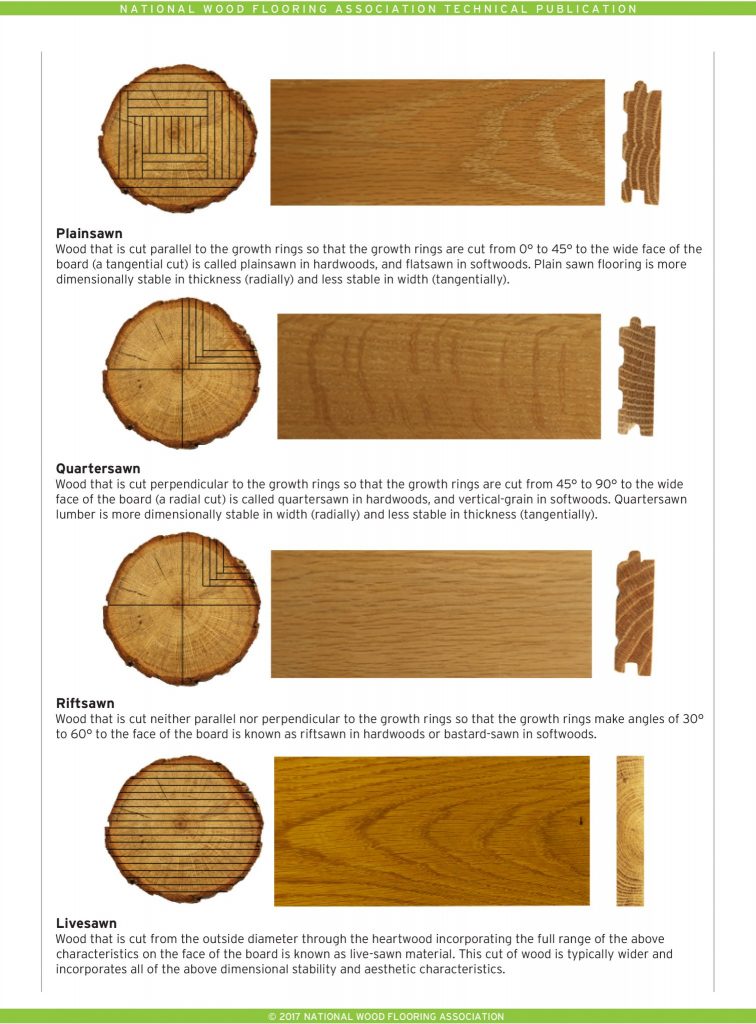
Different hardwood cuts come from how the log is sliced—this directly affects the grain pattern you see in your floors.
Choosing hardwood flooring isn’t just about color or species—it’s also about how the wood is cut. The way a log is sliced dramatically affects the floor’s appearance, durability, and even price.
If you’ve ever wondered why some floors have straight lines while others have bold, dramatic grain patterns, it all comes down to the cut.
Let’s break down the most common types of hardwood cuts so you can choose the perfect look for your space.
Plain Sawn (Flat Sawn)
Plain sawn wood is the most common and affordable type of hardwood flooring.
This method produces wide, flowing grain patterns—often called a “cathedral” look.
Why homeowners love it:
Budget-friendly
Classic, traditional style
Easy to find in many species
Quarter Sawn
Quarter sawn wood is cut at a 90-degree angle to the tree’s growth rings, creating a straight, uniform grain.
In woods like oak, it also produces beautiful natural flecks.
Why it stands out:
More stable than plain sawn
Unique, linear grain pattern
Slightly more high-end look
Keep in mind:
It costs more due to the extra labor and lower yield from each log.
Rift Sawn
Rift sawn wood creates tight, consistent grain lines with very little variation.
It’s a favorite for modern and minimalist designs.
Why designers love it:
Clean, uniform appearance
Extremely stable
Minimal flecking
Keep in mind:
It’s typically the most expensive option.
Live Sawn (European Cut)
Live sawn flooring cuts straight through the log, giving you a mix of all grain patterns in one plank.
The result is bold, natural, and full of character.
Why it’s trending:
Organic, natural look
Eco-friendly (less waste)
Wide, dramatic planks
Keep in mind:
It has more variation, which may not suit every style.
Which One Should You Choose?
Want something classic? → Plain sawn
Want balance + durability? → Quarter sawn
Want modern and sleek? → Rift sawn
Want bold and natural? → Live sawn
Final Thoughts
The cut of hardwood flooring plays a huge role in the final look of your home. Understanding these differences helps you choose flooring that not only looks great—but fits your lifestyle and design goals.


